10-4 by WEX
- 4.2
- Rating
- 100.00K
- Installs
- Free
- Price

 Analysis by App-foxy
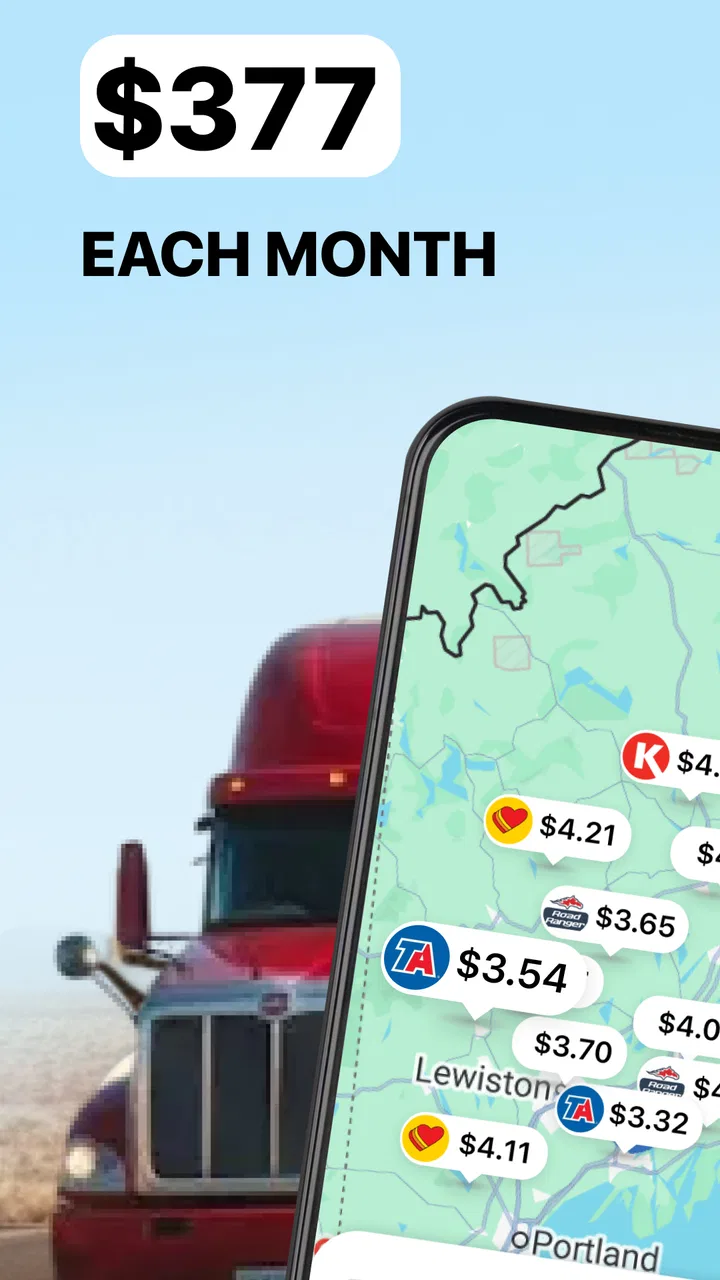
For a truck driver, fuel is not a minor daily expense; it is one of the decisions that can affect an entire route. That is where 10-4 by WEX aims to help. I reviewed it as a free Auto & Vehicles app from WEX, Inc., built around finding ways to save on diesel across the country. Its simple purpose is appealing: make fuel planning less dependent on guesswork and help drivers approach each stop with a clearer idea of where to refuel.
My first impression is that this is a focused tool rather than an all-purpose trucking companion. It is not trying to replace navigation, dispatch software, electronic logging tools, maintenance records, or a full expense platform. That narrower purpose is a strength when you want a fuel-oriented app without sorting through unrelated features. It also creates an important limitation: the app is most useful when your main question is about diesel spending, not when you need one application to manage every part of life on the road.
How the app fits into a real fuel-planning routine
In practical use, I would open 10-4 before a long leg of a trip, check the fuel options along the planned direction, and decide whether a slightly different stop makes sense. That small change in routine matters for professional drivers because a convenient station is not always the most economical one, and the cheapest-looking option is not automatically useful if it forces an inconvenient detour. The app’s value is therefore tied to how deliberately you use the information rather than simply opening it once and expecting it to plan the whole trip.
You May Also Like

 Google Keep - Notes and lists
Google Keep’s Quiet Growth Shows the Appeal of Simpler Notes
As mobile work gets busier, Google Keep keeps winning a simple contest: capture a thought quickly, find it later, and get on with the day.

 Blood Strike: 2.5 Anniversary
Blood Strike’s Loadouts Turn Every Drop Into a Tactical Gamble
A close look at Blood Strike’s custom loadouts: how fast access to signature weapons reshapes its battle royale rhythm, rewards preparation, and narrows the gap between fights.

 Pandora - Music & Podcasts
Pandora’s Music Is Easy to Start, but Harder to Recover
Pandora’s strength is its low-effort path from a seed to a station. Its weak spot is how much confidence it asks you to place in connection, setup, and quiet recovery.

 8 Ball Pool
 Is Built on Rivalries, Rematches, and Routine
A close look at the rivalries, rematches, shared routines, and unanswered safety questions that turn a quick pool match into a persistent mobile community.

 Samsung Music
’s Quiet Strength Is Playing What You Already Own
Its reach comes less from spectacle than from dependable access to a personal library. That simplicity is both the app’s strongest retention engine and its ceiling.

 AccuWeather: Weather Radar
AccuWeather Review: A Quick, Clear Forecast for Everyday Decisions
For everyday plans, the best forecast is the one you can understand quickly. AccuWeather makes rain timing, radar, and local conditions easy to act on, with a few trade-offs.
More From Our News Desk



A realistic example would be a driver finishing a delivery and preparing for the next stretch of highway. Instead of waiting until the tank is low, I would use the app while parked, compare the available diesel choices near the route, and make a note of a practical stopping point. If the preferred location is too far away, the sensible decision may be to refuel earlier rather than chase a small saving. That is an important trade-off: a fuel app can support a decision, but it cannot remove the operational realities of traffic, remaining range, loading schedules, or safe parking.
The app’s store summary presents it as a nationwide diesel-saving tool for truck drivers, and that positioning is clear in the way I think about its audience. It is not primarily aimed at someone looking for ordinary passenger-car fuel prices. The larger the vehicle, the more meaningful a modest difference at the pump can become, so a driver who regularly buys diesel has a stronger reason to keep this kind of app available than a person who fills a small private car occasionally.
10-4 by WEX is currently at version 1.2.12 20260226.6 and requires iOS or Android 11 or later, depending on the device platform. That requirement is worth checking before installing it on an older phone used as a dedicated cab device. A newer personal phone is less likely to create a problem, but drivers often keep older hardware for navigation or work apps, so compatibility should be part of the decision rather than an afterthought.
What you receive without paying
The clearest value point is the price: the app is free to download and use. That makes the trial decision straightforward. You do not have to commit to a subscription or buy the application just to discover whether its fuel information fits your routes. In my view, free access is especially useful for occasional haulers, owner-operators testing a new workflow, and drivers who already have a preferred navigation app but want a separate tool for fuel decisions.
Free does not automatically mean complete, however. The useful question is not whether the download costs anything, but whether the information helps you make a better stop decision often enough to justify another app on your phone. If you only drive short local routes, already know your regular stations, or have a company system that supplies the same fuel guidance, the practical value may be limited even though the monetary entry cost is zero.
I also prefer to separate the app’s free availability from any assumptions about fuel purchases. Installing it does not mean that every diesel transaction will become cheaper, and the app should not be treated as a guarantee of a particular price at a particular stop. Its role is better understood as decision support: it can help you look for savings, while the final result still depends on the station, route, timing, and the terms of the actual purchase.
That distinction is important for budgeting. I would use the app to identify opportunities, then confirm the details that matter before committing to a detour. A driver who treats every displayed saving as certain could lose time or fuel by changing course unnecessarily. A driver who uses it as one input alongside route length, tank level, operating hours, and delivery deadlines is more likely to get genuine value from the free access.
Where it can improve a driver’s workflow
The most useful habit is checking fuel before the need becomes urgent. When the tank is nearly empty, convenience usually wins and there is less freedom to compare options. Looking ahead while stopped gives you time to weigh a lower-cost location against distance and schedule. This is a simple workflow change, but it is more valuable than repeatedly refreshing a fuel app without a plan.
A second practical insight is to use the app at decision points rather than continuously. Checking before leaving a shipper, after a route change, or during a planned break keeps the process manageable. Constantly monitoring fuel information can become a distraction, especially for a driver who already has navigation and communications demanding attention. I would prepare the next likely stop while parked and then return attention to the road.
A third trade-off involves detours. A saving at the pump has to be considered against extra miles, idle time, congestion, and the possibility of losing a convenient exit. For a truck, the best fuel choice is not always the lowest listed price. A location that fits the route and allows a smooth stop may be the better financial decision once the whole trip is considered. The app is most helpful when it gives you options to evaluate, not when it encourages automatic selection of the cheapest result.
There is also a useful distinction between planning a single stop and building a repeatable route routine. For a regular lane, I would compare the app’s suggestions over several trips and remember which locations consistently fit the schedule. That does not mean assuming conditions never change; it means using the application to refine personal knowledge instead of starting from zero on every journey. For an unfamiliar route, I would keep more flexibility because the most attractive fuel option may not suit the actual day’s traffic or delivery timing.
How it compares with familiar alternatives
Many drivers already use a general navigation application to locate fuel. That approach is convenient because the station search is part of a larger map, but it may not give fuel planning the same emphasis as a dedicated diesel-focused tool. A normal map is often better for turn-by-turn guidance and seeing the road ahead, while 10-4 by WEX is more naturally suited to the question, “Where should I think about fueling?” I would use the two roles together rather than forcing one app to do both jobs.
Truck-stop directories and company-provided fuel systems can also be stronger choices in specific situations. A company tool may connect more directly to internal procedures, approved locations, or expense reporting, while a truck-stop app may offer information tailored to amenities and parking. If those details are more important than comparing diesel opportunities, another option could serve you better. The advantage here is focus, not universal coverage of every trucking need.
For a private driver, the comparison changes again. A consumer fuel-price app may be simpler for occasional gasoline or diesel purchases and may feel more relevant to local errands. 10-4 makes more sense when diesel is a recurring work expense and route planning is part of the day. I would not recommend choosing it merely because it is free; I would choose it because its truck-driver orientation matches the way you travel.
The app has reached an average rating of 4.5 from around 500 ratings, with over 100 written reviews, and more than 100K installations. Those figures suggest that it has found a real audience, but they should be read as context rather than proof that it will fit every route. A rating cannot tell me whether the coverage, station selection, or workflow suits my particular operating area. I would still test it during a few normal trips before making it part of a critical routine.
Limitations I would consider before relying on it
The first limitation is that fuel information is only useful if it is timely and relevant to the stop you can actually make. Prices and availability can change, and a displayed opportunity may not remain equally attractive by the time you arrive. I would avoid planning with a margin so tight that one change forces an uncomfortable fuel decision. The app can inform the plan, but it should not replace basic range management.
The second limitation is attention. A driver may be tempted to compare options while moving, especially when a route changes unexpectedly. That is a poor use of any fuel app. I would handle searches while parked, use the result to make a decision, and avoid interacting with the phone during driving. The best workflow is slightly slower but safer and easier to repeat.
The third limitation is that savings are not the only cost. A detour can affect arrival time, tolls, fuel consumption, and fatigue. A station that looks attractive on a screen may be awkward for a large vehicle or unsuitable for the driver’s break schedule. I would treat the application’s suggestions as candidates, then apply common sense about access, timing, and the actual road layout.
There is also a question of dependence. If your employer requires a particular fuel card, network, or reporting process, a separate app may be useful for planning but not sufficient for the transaction itself. In that situation, it should complement the required system rather than replace it. Drivers who need integrated records, dispatch communication, maintenance tracking, or compliance tools will likely need other applications as well.
Finally, free access can encourage people to expect more than the product is designed to provide. I see 10-4 as a focused fuel companion, not a complete operating system for trucking. That is not a criticism of its purpose; it is a reminder to judge it against the right job. If you need a broad suite, a specialized company platform may be a better primary tool, even if this app remains useful as a secondary check.
Who is most likely to get real value
I think the strongest audience is the driver who buys diesel regularly, travels beyond familiar local roads, and has enough control over fuel stops to make comparisons. Owner-operators and independent drivers may appreciate the ability to add another viewpoint to their planning without paying an upfront app fee. Long-distance drivers can also benefit because a small improvement repeated across many refueling decisions is more meaningful than a one-off saving.
It can also suit a driver who dislikes complicated software. Because the purpose is narrow, the learning curve should be easier than with a full fleet-management platform. I would recommend starting with one familiar route: check the app before departure, compare its suggestions with the stops you already know, and see whether it helps you make a better choice without adding stress. That test gives you a practical answer faster than judging it from the installation screen.
Fleet managers and company drivers may find value in a different way. Even when the final purchase must follow company rules, the app can help a driver think ahead and avoid last-minute stops. The usefulness depends on whether the organization permits independent planning and whether the information aligns with its approved fueling process. In a tightly controlled fleet, it may be more of a reference tool than a complete solution.
I would tell short-distance local drivers to be more selective. If your route, fuel location, and schedule are nearly identical every day, the app may not change many decisions. Likewise, someone who mainly wants parking, food, repairs, or navigation should look for a tool built around those needs. The free price removes financial risk, but it does not remove the time cost of maintaining another app and checking information that may not affect your routine.
Installation, age rating, and everyday practicality
The application is listed for Everyone, which makes its audience broad from an age-rating perspective. The more relevant practical question for a working driver is device compatibility and whether the app fits the phone already used in the cab. Since it requires operating system version 11 or later, I would check the work phone before planning to depend on it during a trip.
WEX, Inc. is the developer behind the application, and the current release is identified as version 1.2.12 20260226.6. I would keep the app updated on the device used for route planning, particularly if it becomes part of a recurring fuel routine. At the same time, I would not install an update immediately before a critical departure without opening the app afterward and confirming that the workflow still feels familiar. That is a sensible precaution for any work tool used on the road.
My preferred setup would be simple: install it on the device I already use for travel, open it while parked, and decide in advance how often it deserves attention. I would not let it become another source of notifications or a reason to handle the phone while driving. The strongest benefit comes from preparation, not constant interaction.
My buy-or-skip verdict
Because 10-4 by WEX is free, I see little reason for a diesel-focused truck driver to reject it without trying it, provided the phone meets the operating-system requirement. The right expectation is modest but useful: it may help you identify better fueling possibilities and make route decisions with more awareness. It is not a promise that every stop will be cheaper, and it is not a substitute for navigation, company systems, or sound range planning.
I would recommend it to long-haul and independent drivers who regularly compare fuel stops, especially those willing to check before the tank becomes urgent. I would also suggest a short trial on normal routes rather than relying on it immediately for a complicated trip. Watch whether it saves decision-making time, whether its suggestions fit your actual truck movements, and whether the information changes what you would otherwise do.
I would skip it as a primary tool if you need detailed fleet management, integrated expense records, parking information, or comprehensive route guidance. A general navigation app, a company platform, or a broader truck-stop service may be better for those jobs. Still, those limitations do not undermine its central purpose. For a driver who wants a free, focused way to think more carefully about diesel stops, this is worth testing.
FAQs for 10-4 by WEX
01What is the primary purpose of the 10-4 by WEX app?
The 10-4 by WEX app is designed to streamline communication and logistics management for transportation businesses. It provides real-time tracking of shipments, allowing users to monitor their delivery progress. This helps companies enhance efficiency, reduce costs, and improve customer satisfaction by ensuring timely deliveries and transparent operations.
02Is the 10-4 by WEX app available for both Android and iOS devices?
Yes, the 10-4 by WEX app is available for download on both Android and iOS platforms. Users can find the app on the Google Play Store for Android devices and the Apple App Store for iOS devices, ensuring compatibility with a wide range of smartphones and tablets.
03Does the 10-4 by WEX app require a subscription or is it free to use?
While downloading the 10-4 by WEX app is free, access to its full range of features may require a subscription. The app offers various pricing plans tailored to different business needs. Users should review these plans to determine which aligns best with their operational requirements and budget.
04What security features does the 10-4 by WEX app offer to protect user data?
The 10-4 by WEX app employs robust security measures, including data encryption and secure login protocols, to protect user information. It ensures that sensitive data, such as shipment details and personal user information, are safeguarded against unauthorized access, providing peace of mind for businesses relying on the app.
05Can the 10-4 by WEX app integrate with other logistics management software?
Yes, the 10-4 by WEX app is designed to integrate seamlessly with various logistics management systems. This feature allows businesses to synchronize their existing operations with the app, ensuring a cohesive workflow. Integration can enhance data accuracy and streamline processes, making logistics management more efficient.
Pros
- Intuitive user interface for easy navigation.
- Comprehensive features for task management.
- Seamless integration with calendar apps.
- Customizable reminders and notifications.
- Supports collaborative task sharing.
Cons
- Limited offline functionality.
- Occasional sync issues reported.
- Premium features behind a paywall.
- Lacks advanced project management tools.
- No dark mode option available.

10-4 by WEX
Gallery